Pages

Showing posts with label China. Show all posts

Tuesday, 5 August 2014

Longji Rice Terrace, China

Longji Rice Terrace, China
The Longsheng Rice Terraces (simplified Chinese: 龙胜梯田; traditional Chinese: 龍勝梯田; pinyin: Lóngshèng Tītián) are located in Longsheng County, about 100 km (2 hours drive) from Guilin, Guangxi, China. The most popular are Ping An Rice Terrace and Jinkeng Rice Terrace.[citation needed]

The terraced fields are built along the slope winding from the riverside up to the mountain top, between 600 m to 800 m above sea level.[1] The coiling line that starts from the mountain foot up to the mountain top divides the mountain into layers of water in spring, layers of green rice shoots in summer, layers of rice in fall, and layers of frost in winter. The terraced fields were mostly built about 650 years ago.[2]

Source:Wikipedia
NOTE: PLEASE Use the Older Post and Newer Post buttons just below comment box to navigate between posts.

Saturday, 26 July 2014

Top 5 Most Beautiful & Best Places to Visit in China

5:Luotuofeng peak, Sichuan, China:


Luotuofeng peak, Sichuan, China:

Sichuan (Chinese: 四川; pinyin: About this sound Sìchuān, known formerly in the West by its postal map spellings of Szechwan or the alternative romanisation Szechuan) is a province of the People's Republic of China, located in the southwest of the country. The name of the province is an abbreviation of Sì Chuānlù (四川路), or "Four circuits of rivers", which is itself abbreviated from Chuānxiá Sìlù (川峡四路), or "Four circuits of rivers and gorges", named after the division of the existing circuit into four during the Northern Song Dynasty.[4] The capital is Chengdu, a key economic centre of Western China.


Source : Wikipedia


4:Gate by marcusuke,,Chengdu, China :

Gate by marcusuke,,Chengdu, China :

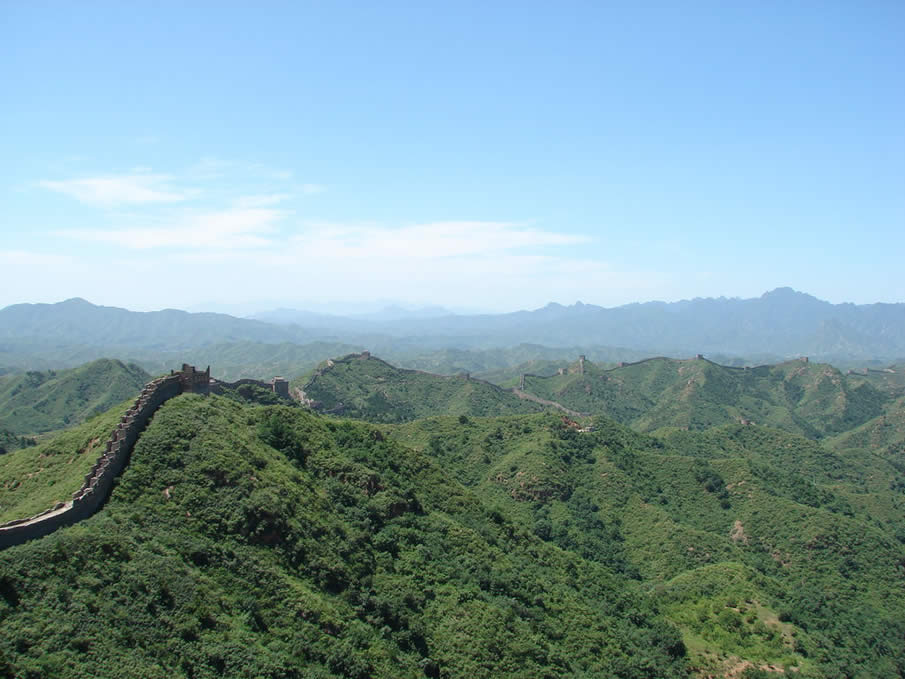
The Great Wall of China is a series of fortifications made of stone, brick, tamped earth, wood, and other materials, generally built along an east-to-west line across the historical northern borders of China in part to protect the Chinese Empire or its prototypical states against intrusions by various nomadic groups or military incursions by various warlike peoples or forces. Several walls were being built as early as the 7th century BC;[3] these, later joined together and made bigger and stronger, are now collectively referred to as the Great Wall.[4] Especially famous is the wall built between 220–206 BC by the first Emperor of China, Qin Shi Huang. Little of that wall remains. Since then, the Great Wall has on and off been rebuilt, maintained, and enhanced; the majority of the existing wall is from the Ming Dynasty.


Source :Wikipedia


3:Libo, Guizhou, China:


Libo, Guizhou, China:

Libo County (Chinese: 荔波县; pinyin: Lìbō Xiàn) is a county of Guizhou, China. It is under the administration of the Qiannan Buyei and Miao Autonomous Prefecture.

Source :Wikipedia

2:Chenzhou, Hunan, China 


Chenzhou, Hunan, China
 

Chenzhou (Chinese: 郴州; pinyin: Chēnzhōu) is a city located in the south of Hunan province, People's Republic of China. Its administrative area covers 19,317 square kilometres (7,458 sq mi), 9.2% of the provincial area, and its total population reached 4,559,600 in 2001, 26% of them living in urban areas, 74% of them live in rural areas.[1]

Source :Wikipedia


1:Yangshuo, Guangxi, China:

Yangshuo, Guangxi, China:

Yangshuo County (simplified Chinese: 阳朔县; traditional Chinese: 陽朔縣; pinyin: Yángshuò Xiàn) is a county under the jurisdiction of Guilin City, in the northeast of Guangxi, China. Its seat is located in Yangshuo Town. Surrounded by karst peaks and bordered on one side by the Li River it is easily accessible by bus or by boat from nearby Guilin. In the 1980s, the town became popular with foreign backpackers, and by the late 1990s packaged tourists began arriving in greater numbers. At that time, domestic tourism represented only a small fraction of the tourists but by 2005 domestic tourists outnumbered foreign tourists by a great margin. Today, the town has become a resort destination for both domestic and foreign travelers.


Source:Wikipedia

NOTE: PLEASE Use the Older Post and Newer Post buttons just below comment box to navigate between posts.

Wednesday, 23 July 2014

Xian, China

Xian, China

NOTE: PLEASE Use the Older Post and Newer Post buttons just below comment box to navigate between posts.

Tuesday, 22 October 2013

Cliff Path, Huangshan Mountain, China

Cliff Path, Huangshan Mountain, China
Huangshan (simplified Chinese: 黄山; traditional Chinese: 黃山; pinyin: Huángshān; literally "Yellow Mountain"),[2] is a mountain range in southern Anhui province in eastern China. The range is composed of material that was uplifted from an ancient sea during the Mesozoic era, 100 million years ago. The mountains themselves were carved by glaciers during the Quaternary. Vegetation on the range is thickest below 1,100 meters (3,600 ft), with trees growing up to the treeline at 1,800 meters (5,900 ft).
The area is well known for its scenery, sunsets, peculiarly shaped granite peaks, Huangshan Pine trees, and views of the clouds from above. Huangshan is a frequent subject of traditional Chinese paintings and literature, as well as modern photography. It is a UNESCO World Heritage Site, and one of China's major tourist destinations.

Source:Wikipedia
NOTE: PLEASE Use the Older Post and Newer Post buttons just below comment box to navigate between posts.

Monday, 21 October 2013

THE LESHAN GIANT BUDDHA, CHINA

THE LESHAN GIANT BUDDHA, CHINA
The Leshan Giant Buddha (simplified Chinese: 乐山大佛; traditional Chinese: 樂山大佛; pinyin: Lèshān Dàfó) was built during the Tang Dynasty (618–907AD). It is carved out of a cliff face that lies at the confluence of the Minjiang, Dadu and Qingyi rivers in the southern part of Sichuan province in China, near the city of Leshan. The stone sculpture faces Mount Emei, with the rivers flowing below his feet. It is the largest carved stone Buddha in the world[1] and it is by far the tallest pre-modern statue in the world.

Source:Wikipedia
image source:Link
NOTE: PLEASE Use the Older Post and Newer Post buttons just below comment box to navigate between posts.

Saturday, 7 September 2013

The abandoned Wonderland Amusement Park outside Beijing, China

The abandoned Wonderland Amusement Park outside Beijing, China

Wonderland was an abandoned amusement park construction project located in Chenzhuang Village, Nankou Town, Changping District, People's Republic of China, about 20 miles (32 kilometers) outside of Beijing. Originally proposed by the Thailand based property developer Reignwood Group,[1] and designed to be the largest amusement park in Asia (to have covered 120 acres (49 ha)), construction stopped in 1998 following financial problems with local officials, while a 2008 attempt to start construction again also failed.[2] The site, which featured a number of abandoned structures, including the frame work of a castle-like building and medieval-themed outer buildings, was being reclaimed by local farmers to grow their various crops while the site was abandoned. People have reported that sometimes when visiting the site, there would still be parking attendants in the site's parking lot, presumably to tend to onlookers and curious sightseers that came to visit.

Source:Wikipedia
NOTE: PLEASE Use the Older Post and Newer Post buttons just below comment box to navigate between posts.

Thursday, 5 September 2013

Crystalline Turquoise Lake, Jiuzhaigou National Park, China

Crystalline Turquoise Lake, Jiuzhaigou National Park, China

Jiuzhaigou Valley (simplified Chinese: 九寨沟; traditional Chinese: 九寨溝; pinyin: Jiǔzhàigōu; literally "Valley of Nine Villages"; Tibetan: གཟི་རྩ་སྡེ་དགུ།, Wylie: gzi-rtsa sde-dgu, ZYPY: Sirza Degu) is a nature reserve and national park located in the north of Sichuan, China.

Jiuzhaigou Valley is part of the Min Mountains on the edge of the Tibetan Plateau and stretches over 72,000 hectares (180,000 acres). It is known for its many multi-level waterfalls, colorful lakes, and snow-capped peaks. Its elevation ranges from 2,000 to 4,500 metres (6,600 to 14,800 ft).

Jiuzhaigou Valley was inscribed by UNESCO as a World Heritage Site in 1992 and a World Biosphere Reserve in 1997. It belongs to the category V (Protected Landscape) in the IUCN system of protected area categorization.

Source:Wikipedia
NOTE: PLEASE Use the Older Post and Newer Post buttons just below comment box to navigate between posts.

Saturday, 31 August 2013

Great Wall of China, China

Great Wall of China, China

One of the seven wonders of the world, the Great Wall of China is a man-made structure that was constructed over two thousand years ago. It is estimated to have taken around 100 years to complete. You can truly witness man’s potential when you take in the beauty and vastness of the Great Wall.
great_wall_of_china
great_wall_of_china_1
great_wall_of_china_4
The construction on the Great Wall of China started in the 5th Century B.C. It is actually not a single wall, but rather many walls put together. Combined, they stretch over 4,000 miles. This collection of walls was constructed to protect the Chinese empire from the Xiongnu people in the north. The wall was initially built of stone, grass, earth, and wood, but bricks were used also after production began. It is believed that around two to three million Chinese died during the construction of this wonder.
NOTE: PLEASE Use the Older Post and Newer Post buttons just below comment box to navigate between posts.

Sunday, 25 August 2013

The Great Wall in China

The Great Wall in China

The Great Wall of China is a series of fortifications made of stone, brick, tamped earth, wood, and other materials, generally built along an east-to-west line across the historical northern borders of China in part to protect the Chinese Empire or its prototypical states against intrusions by various nomadic groups or military incursions by various warlike peoples or forces. Several walls were being built as early as the 7th century BC;[3] these, later joined together and made bigger, stronger, and unified are now collectively referred to as the Great Wall.[4] Especially famous is the wall built between 220–206 BC by the first Emperor of China, Qin Shi Huang. Little of that wall remains. Since then, the Great Wall has on and off been rebuilt, maintained, and enhanced; the majority of the existing wall was reconstructed during the Ming Dynasty.

Source:Wikipedia
NOTE: PLEASE Use the Older Post and Newer Post buttons just below comment box to navigate between posts.

Wednesday, 7 August 2013

Reed Flute Cave, China

Reed Flute Cave, China

The Reed Flute Cave (Chinese: 芦笛岩; pinyin: Lúdí Yán) is a landmark and tourist attraction in Guilin, Guangxi, China.[1] It is a natural limestone cave with multicolored lighting and has been one of Guilin’s most interesting attractions for over 1200 years. It is over 180 million years old. The cave got its name from the type of reed growing outside, which can be made into melodious flutes. Reed Flute Cave is filled with a large number of stalactites, stalagmites and rock formations in weird and wonderful shapes. Inside, there are more than 70 inscriptions written in ink, which can be dated back as far as 792 AD in the Tang Dynasty. These aged inscriptions tell us that it has been an attraction in Guilin since ancient times.[2][not in citation given] It was rediscovered in the 1940s by a group of refugees fleeing the Japanese troops.

Source:Wikipedia
NOTE: PLEASE Use the Older Post and Newer Post buttons just below comment box to navigate between posts.

Tuesday, 6 August 2013

The Reed Flute Cave, Guilin, Guangxi, China

The Reed Flute Cave, Guilin, Guangxi, China


It is a natural limestone cave with multicolored lighting and has been one of Guilin’s most interesting attractions for over 1200 years. It is over 180 million years old. The cave got its name from the type of reed growing outside, which can be made into melodious flutes. Reed Flute Cave is filled with a large number of stalactites, stalagmites and rock formations in weird and wonderful shapes. Inside, there are more than 70 inscriptions written in ink, which can be dated back as far as 792 AD in the Tang Dynasty. These aged inscriptions tell us that it has been an attraction in Guilin since ancient times.

The Reed Flute Cave (Chinese pinyin: Lúdí Yán) is a landmark and tourist attraction in Guilin, Guangxi, China.[1] It is a natural limestone cave with multicolored lighting and has been one of Guilin’s most interesting attractions for over 1200 years. It is over 180 million years old. The cave got its name from the type of reed growing outside, which can be made into melodious flutes. Reed Flute Cave is filled with a large number of stalactites, stalagmites and rock formations in weird and wonderful shapes. Inside, there are more than 70 inscriptions written in ink, which can be dated back as far as 792 AD in the Tang Dynasty. These aged inscriptions tell us that it has been an attraction in Guilin since ancient times.[2][not in citation given] It was rediscovered in the 1940s by a group of refugees fleeing the Japanese troops.


Source:Wikipedia
NOTE: PLEASE Use the Older Post and Newer Post buttons just below comment box to navigate between posts.

Hong Kong,China

Hong Kong,China

Hong Kong (see Name) is one of the two Special Administrative Regions of the People's Republic of China, the other being Macau. It is situated on China's south coast and, enclosed by the Pearl River Delta and South China Sea,[8] it is known for its expansive skyline and deep natural harbour. With a land mass of 1,104 km2 (426 sq mi) and a population of seven million people, Hong Kong is one of the most densely populated areas in the world. Hong Kong's population is 93.6% ethnic Chinese and 6.4% from other groups. Hong Kong's Han Chinese majority originate mainly from the cities of Guangzhou and Taishan in the neighbouring Guangdong province.

Source:Wikipedia

NOTE: PLEASE Use the Older Post and Newer Post buttons just below comment box to navigate between posts.

Great Wall of China

Great Wall of China


The Great Wall of China is a series of fortifications made of stone, brick, tamped earth, wood, and other materials, generally built along an east-to-west line across the historical northern borders of China in part to protect the Chinese Empire or its prototypical states against intrusions by various nomadic groups or military incursions by various warlike peoples or forces. Several walls were being built as early as the 7th century BC; these, later joined together and made bigger, stronger, and unified are now collectively referred to as the Great Wall. Especially famous is the wall built between 220–206 BC by the first Emperor of China, Qin Shi Huang. Little of that wall remains. Since then, the Great Wall has on and off been rebuilt, maintained, and enhanced; the majority of the existing wall was reconstructed during the Ming Dynasty.

Source:Wikipedia
NOTE: PLEASE Use the Older Post and Newer Post buttons just below comment box to navigate between posts.